Back to overview
MediumUSA

Ocicat

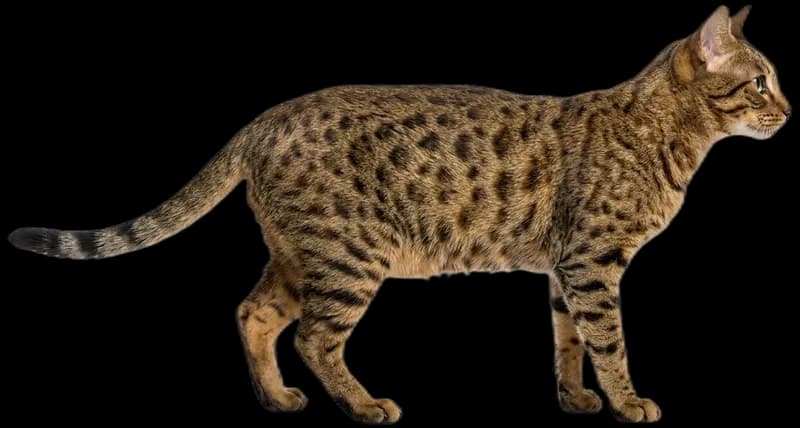
"The Ocicat is a fascinating, athletic cat that combines a wild appearance with a gentle temperament. Highly intelligent, playful, and a loyal companion for families, this remarkable breed contains no wild blood at all. Anyone looking for an active and sociable pet will find great joy in this cat."

Your Height:
180 cm
Human
Ocicat
Shoulder Height: 31 cm
Age12-16 years
Average life expectancy with species-appropriate husbandry and good health.
Body Length
40-55cmBack Height: 28-33cm
Body length from nose to base of the tail.
Weight5-7 kg
Ideal body weight for a healthy, adult breed.
Cost/Month€55+
The sum of food, insurance, and basic care per month.

Character Profile

Activity Level
A measure of the daily urge to move and the necessary mental stimulation.

A very active and playful breed that requires plenty of exercise.

Affection Level
How cuddly and attached the breed is – some cats constantly seek physical contact, others are more aloof.

Very people-oriented and affectionate, loves being near its owners.

Independence
How well the cat can cope on its own. Independent breeds need less attention.

Needs social interaction and does not like being alone for long periods.

Family Friendliness
Describes patience and adaptability when dealing with children and family bustle.

Great with children and generally gets along well with other pets.

Beginner Friendly
Indicates how well the breed is suited for first-time owners without much experience.

Well-suited for cat beginners due to its friendly and adaptable nature.

Apartment Friendly
Considers space requirements, the general need for rest, and how well the cat can cope with indoor living.

Can live well in an apartment provided there is sufficient climbing and enrichment.

Grooming Effort
Time required for brushing, bathing, and nail care. Long-haired breeds often need daily care.

Short coat requires minimal grooming; occasional brushing is sufficient.

Shedding
How much loose hair the breed loses in the house. Important for allergy sufferers and cleaning effort.

Sheds only moderately, making maintenance easy.

Vocalization
How talkative the breed is. Some cats meow frequently and loudly, while others are rather quiet.

Communicative, though generally not as vocal as some Siamese relatives.

Did you know?

Keeping a pet of this size costs over 80€ per month on average. Plan your finances wisely.

Character & Training

The Ocicat is known for its outgoing and friendly temperament. It is highly intelligent and can often be taught tricks or how to play fetch. Due to its high social needs, it is an ideal family cat that does not like being alone. Its temperament is lively and curious, which is why it always wants to explore its surroundings. It is very adaptable and generally gets along well with other pets. However, it requires constant stimulation to ensure it does not become bored or under-stimulated.

Living & Exercise

Although the Ocicat is very active, it can adapt well to indoor living. It is important to provide plenty of vertical space, such as cat trees and climbing shelves. Intelligent toys that challenge its sharp mind are essential to keep it physically and mentally occupied. A secured balcony or enclosure is highly appreciated. The breed requires daily interactive playtime with its owners. Due to its social nature, it should ideally not be kept as a solitary pet.

Health & Grooming

The Ocicat is considered a robust and healthy breed. Thanks to its deliberate breeding history, it lacks extreme physical features that could lead to health problems. Nevertheless, owners should be aware of breed-specific predispositions such as hypertrophic cardiomyopathy (HCM). Grooming is very simple and straightforward due to the short, close-fitting coat. Brushing once a week is enough to remove loose hair and maintain its shine. Regular veterinary check-ups and a balanced diet are the foundation for a long, healthy life.

History

The history of the Ocicat began in the USA in 1964 by pure chance. Virginia Daly initially wanted to breed a Siamese-pointed Abyssinian. When a kitten was born with a spotted coat pattern reminiscent of an ocelot, interest in this new look was sparked. By selectively crossing Abyssinians, Siamese, and later American Shorthairs, the breed type was solidified. Despite its exotic appearance, which gave it the name 'Ocicat', the breed contains no wild blood. It was officially recognized as a breed and has since enjoyed great popularity worldwide.

Ocicat | Cat Breeds