Back to overview
MediumUSA / United Kingdom

Himalayan Cat

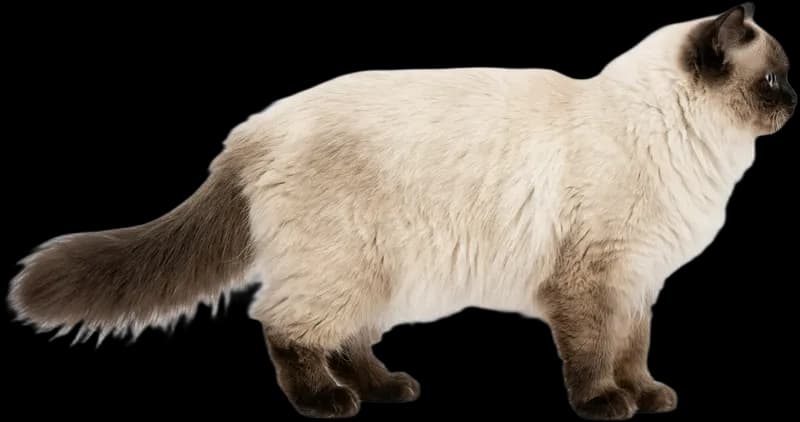
"The Himalayan cat is a fascinating cross between the Persian and the Siamese, combining the best of both worlds. Known for her stunning point coat and bright blue eyes, she captivates with an incredibly gentle and affectionate nature, making her the perfect, loyal companion for a cozy home."

Your Height:
180 cm
Human
Himalayan Cat
Shoulder Height: 28 cm
Age12-15 years
Average life expectancy with species-appropriate husbandry and good health.
Body Length
40-50cmBack Height: 25-30cm
Body length from nose to base of the tail.
Weight4.5-7.5 kg
Ideal body weight for a healthy, adult breed.
Cost/Month€60+
The sum of food, insurance, and basic care per month.

Character Profile

Activity Level
A measure of the daily urge to move and the necessary mental stimulation.

She is rather laid-back, preferring relaxed observation over wild play.

Affection Level
How cuddly and attached the breed is – some cats constantly seek physical contact, others are more aloof.

Very affectionate and deeply enjoys being close to her humans.

Independence
How well the cat can cope on its own. Independent breeds need less attention.

She needs the company of her owners and does not like being left alone.

Family Friendliness
Describes patience and adaptability when dealing with children and family bustle.

Ideal for families due to her calm and gentle nature.

Beginner Friendly
Indicates how well the breed is suited for first-time owners without much experience.

While grooming is demanding, her temperament is very easygoing and gentle.

Apartment Friendly
Considers space requirements, the general need for rest, and how well the cat can cope with indoor living.

Very suitable for indoor living as she has little desire to go outside.

Grooming Effort
Time required for brushing, bathing, and nail care. Long-haired breeds often need daily care.

Her long, thick coat requires daily intensive brushing.

Shedding
How much loose hair the breed loses in the house. Important for allergy sufferers and cleaning effort.

Due to the thick undercoat, she sheds a lot, especially during seasonal changes.

Vocalization
How talkative the breed is. Some cats meow frequently and loudly, while others are rather quiet.

She is rather quiet, communicating softly when she wants attention.

Did you know?

Keeping a pet of this size costs over 80€ per month on average. Plan your finances wisely.

Character & Training

The Himalayan cat has an exceptionally peaceful and balanced temperament. She is closely bonded to her owners and prefers to spend time in their immediate vicinity. Her personality is rather quiet, making her a pleasant roommate. Although she is not extremely active, she enjoys joint play sessions as long as they are not too strenuous. She is patient with children and other pets, provided she has her own places to retreat to. Due to her gentle nature, training requires loving but consistent guidance without any harshness.

Living & Exercise

As the Himalayan is an indoor cat, she feels most comfortable in a cozy environment. She does not need massive climbing frames but appreciates comfortable resting spots on various levels. Sufficient opportunities for mental stimulation are important to prevent boredom. A secure balcony is a nice addition but not a requirement for her well-being. She prefers a stress-free environment where she can enjoy her daily periods of rest undisturbed. A clean, regularly maintained litter box is essential for this clean-loving breed.

Health & Grooming

In terms of health, the Himalayan is predisposed to certain breed-specific issues due to her Persian ancestry. These mainly include respiratory problems due to the shortened nose as well as eye issues, which may prone to increased tearing due to the head shape. Heart diseases such as HCM should also be ruled out by breeders through screenings. Daily coat care is absolutely essential to prevent matting and maintain skin health. With proper care and high-quality nutrition, she can lead a healthy and content life.

History

The history of the Himalayan cat began in the 1930s in the USA, when breeders attempted to integrate the point pattern of the Siamese into the body type of the Persian cat. Over several decades, systematic crosses were carried out to establish the characteristic features. The breed received its name due to the similarity of its coat coloration to the Himalayan rabbit. After initial difficulties in being recognized by various breeding associations, it was finally established as an independent breed, often within the Persian group. Today, it enjoys great popularity worldwide due to its beauty and pleasant character.

Himalayan Cat | Cat Breeds