Back to overview
MediumEthiopia (formerly Abyssinia)

Abyssinian

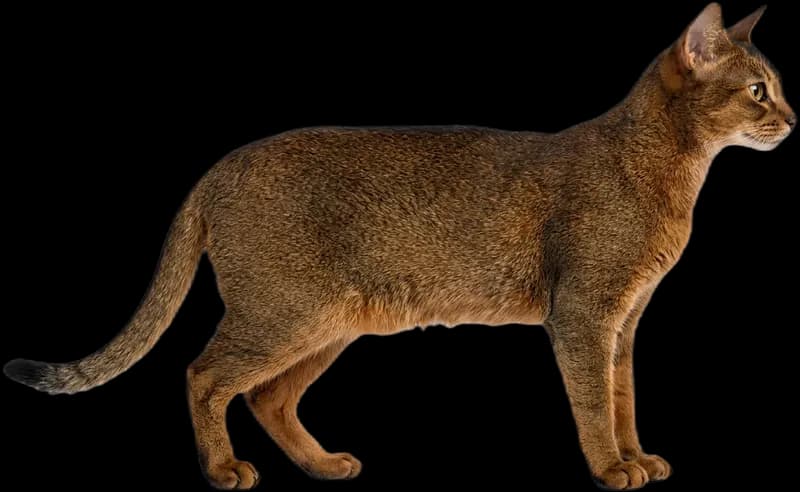
"The Abyssinian captivates with its elegant, wildcat-like appearance and irrepressible temperament. As an intelligent, curious companion, it loves to explore its surroundings. This lively breed is perfect for people seeking an interactive cat that thrives on plenty of play and attention at the heart of family life."

Your Height:
180 cm
Human
Abyssinian
Shoulder Height: 28 cm
Age12-15 years
Average life expectancy with species-appropriate husbandry and good health.
Body Length
40-50cmBack Height: 25-30cm
Body length from nose to base of the tail.
Weight4-5.5 kg
Ideal body weight for a healthy, adult breed.
Cost/Month€60+
The sum of food, insurance, and basic care per month.

Character Profile

Activity Level
A measure of the daily urge to move and the necessary mental stimulation.

Abyssinians are extremely playful, lively, and love climbing and enrichment activities.

Affection Level
How cuddly and attached the breed is – some cats constantly seek physical contact, others are more aloof.

Very people-oriented and affectionate, they always want to be part of their owners' lives.

Independence
How well the cat can cope on its own. Independent breeds need less attention.

Needs interaction but is not a constant lap cat, preferring to explore actively.

Family Friendliness
Describes patience and adaptability when dealing with children and family bustle.

Good for active families as they demand significant attention and playtime.

Beginner Friendly
Indicates how well the breed is suited for first-time owners without much experience.

Suitable for beginners willing to invest time due to their high activity levels.

Apartment Friendly
Considers space requirements, the general need for rest, and how well the cat can cope with indoor living.

Needs plenty of space to climb and play; indoor-only living requires extensive enrichment.

Grooming Effort
Time required for brushing, bathing, and nail care. Long-haired breeds often need daily care.

Very low maintenance; the short coat only requires occasional brushing.

Shedding
How much loose hair the breed loses in the house. Important for allergy sufferers and cleaning effort.

Moderate shedding, making them relatively easy to manage.

Vocalization
How talkative the breed is. Some cats meow frequently and loudly, while others are rather quiet.

Enjoys communicating with soft, melodic tones, though not excessively loud.

Did you know?

Keeping a pet of this size costs over 80€ per month on average. Plan your finances wisely.

Character & Training

Abyssinians are considered highly intelligent, curious, and extremely playful. They learn quickly and can often be engaged in clicker training. Their nature is cheerful, and they are always eager to participate in all household activities. Due to their high energy levels, they require both physical and mental stimulation. While not classic lap cats, they actively seek the proximity of their human companions. Patience and consistent, loving guidance lead to a very close bond with this clever breed.

Living & Exercise

As they are very active, Abyssinians need plenty of space for climbing and frolicking. High-quality cat trees, secured climbing options, and interactive toys are essential in the home. A secured balcony or outdoor access is highly appreciated if the environment is safe. Boredom must be avoided at all costs, as they might otherwise creatively rearrange their surroundings. They are happiest when not left alone for long periods and are provided with constant entertainment.

Health & Grooming

The Abyssinian is a robust and healthy breed, yet there are some breed-specific predispositions. One should watch for signs of pyruvate kinase deficiency (PKD) and PRA (progressive retinal atrophy). Annual veterinary check-ups are recommended to monitor their health status. Grooming is incredibly simple due to the short coat, limited to occasional brushing. High-quality food supports a glossy coat and a healthy immune system. With good care, they reach an age of 12 to 15 years.

History

The exact origin of the Abyssinian is legendary, but it is usually associated with Ethiopia, the historic Abyssinia. The first cats were brought to Europe by British soldiers in the 19th century. Breeders in Great Britain then began to consolidate the breed and refine the now-typical ticking of the coat. During the 20th century, the breed gained worldwide popularity due to its resemblance to the sacred cats of ancient Egypt. Today, they are cherished globally for their elegant appearance and lively character.

Abyssinian | Cat Breeds