Back to overview
MediumFrance / Myanmar

Birman

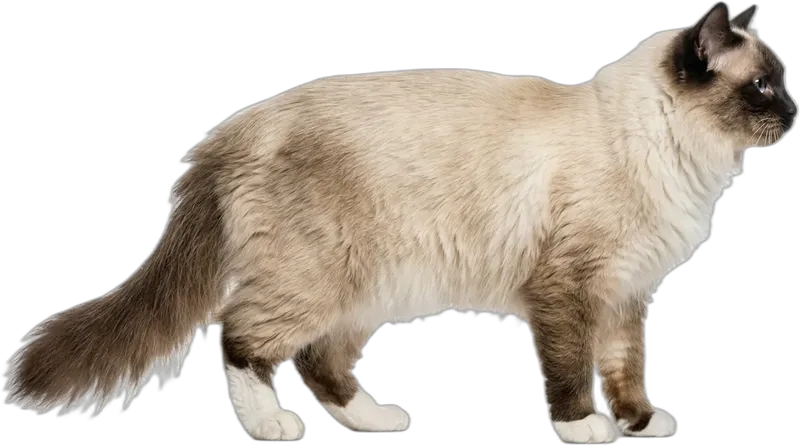
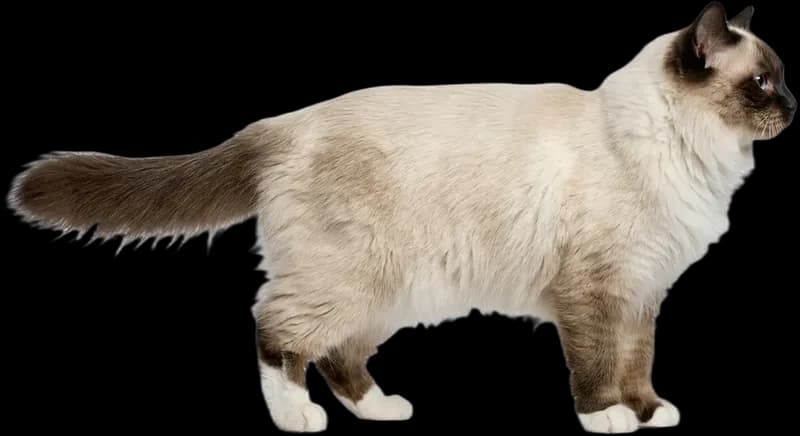
"The Birman captivates with its unique appearance: semi-long, light-colored fur with striking points and characteristic white paws, known as gloves. Its gentle, cuddly nature and balanced temperament make it an ideal, affectionate family member for anyone looking for a harmonious and uncomplicated feline companion."

Your Height:
180 cm
Human
Birman
Shoulder Height: 28 cm
Age12-16 years
Average life expectancy with species-appropriate husbandry and good health.
Body Length
45-55cmBack Height: 25-30cm
Body length from nose to base of the tail.
Weight4.5-6 kg
Ideal body weight for a healthy, adult breed.
Cost/Month€65+
The sum of food, insurance, and basic care per month.

Character Profile

Activity Level
A measure of the daily urge to move and the necessary mental stimulation.

Enjoys playing, but is not an overly restless or hyperactive cat.

Affection Level
How cuddly and attached the breed is – some cats constantly seek physical contact, others are more aloof.

Very people-oriented and constantly seeks the company of its owners.

Independence
How well the cat can cope on its own. Independent breeds need less attention.

Requires social interaction and dislikes being alone for long periods.

Family Friendliness
Describes patience and adaptability when dealing with children and family bustle.

Due to its gentle nature, it is ideal for families with children.

Beginner Friendly
Indicates how well the breed is suited for first-time owners without much experience.

Has a very balanced temperament, making it easy for beginners.

Apartment Friendly
Considers space requirements, the general need for rest, and how well the cat can cope with indoor living.

Very suitable for apartment living due to its adaptable personality.

Grooming Effort
Time required for brushing, bathing, and nail care. Long-haired breeds often need daily care.

The silky coat rarely mats; weekly brushing is generally sufficient.

Shedding
How much loose hair the breed loses in the house. Important for allergy sufferers and cleaning effort.

Sheds moderately, less than some other long-haired breeds.

Vocalization
How talkative the breed is. Some cats meow frequently and loudly, while others are rather quiet.

Communicates in a friendly, gentle way, but is not overly vocal.

Did you know?

Keeping a pet of this size costs over 80€ per month on average. Plan your finances wisely.

Character & Training

The Birman is considered extremely gentle, friendly, and well-balanced. It is very attached to its human family and wants to be involved in everything without being intrusive. Its personality is a harmonious blend of the playfulness of the Siamese and the calmness of the Persian. They are generally easy to train as they want to please their owners. Aggression is completely foreign to them, making them perfect companions. In a quiet environment, they reach their full potential as loving, cuddly partners.

Living & Exercise

Because they are very adaptable, the Birman feels quite at home in an apartment. They do not need huge spaces but appreciate climbing opportunities and safe retreat spots. Sufficient play opportunities and quality time with their humans are essential for their well-being. Since they do not have an extreme urge to roam, they are perfectly suited for indoor living in a secured apartment. Nevertheless, if possible, they enjoy a secure balcony to get some fresh air.

Health & Grooming

The breed is generally robust and long-lived. However, responsible owners should be aware of breed-specific genetic predispositions such as heart muscle diseases (HCM) or kidney issues (PKD). Grooming is fortunately less complicated than with other long-haired breeds, as the undercoat is relatively sparse. Regular brushing, especially during shedding, is usually sufficient to prevent matting and maintain the silky fur. A balanced diet further supports their vitality and skin health.

History

The history of the Birman is shrouded in legends leading back to the temples of Burma. Officially, the breeding history began in the 1920s in France after a pair of these cats was exported there. The breed was systematically developed and refined there to reach its current standard. During World War II, the breed was nearly decimated but was saved through targeted cross-breeding programs. Today, it is recognized worldwide as an elegant and friendly breed and is very popular among cat lovers.

Birman | Cat Breeds